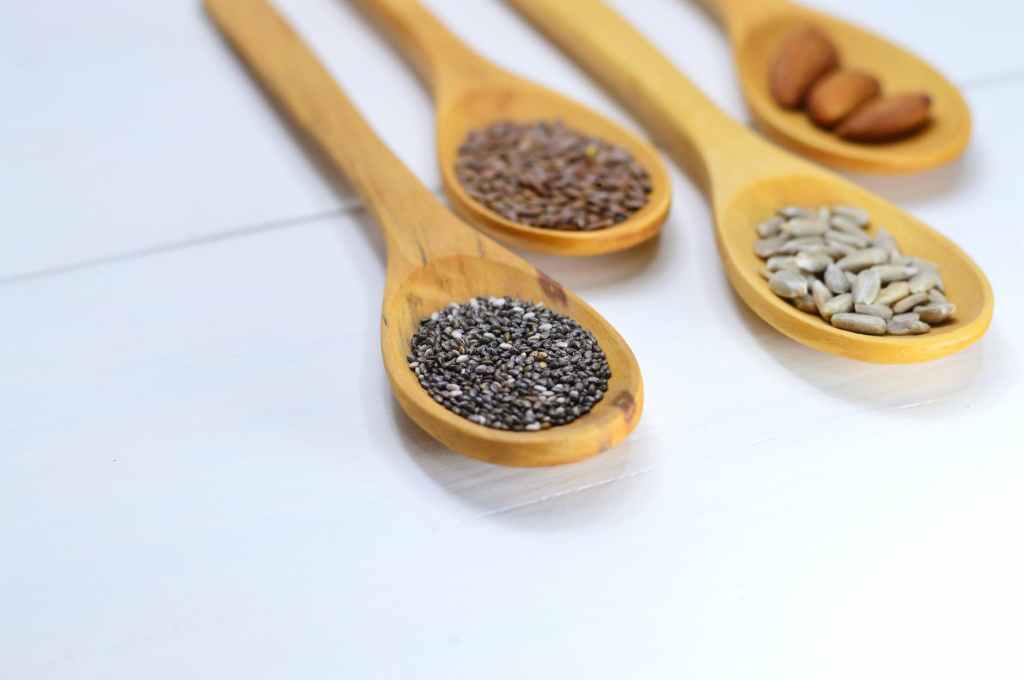
Seed cycling is a natural way for women to support hormonal imbalances and can easily be incorporated into most daily routines. Hormonal imbalances can occur for a number of reasons such as: diet, exposure to toxins, pollutants, chemicals, and stress. Even slight hormonal imbalances can contribute to issues such as infertility, PCOS, mood disorders (anxiety, depression), fatigue, acne, thyroid disorders, and more.
Estrogen, Progesterone and Fertility
Imbalances in either estrogen or progesterone (either too high or too low) can lead to fertility issues for different reasons. Estrogen is important for ovulation and preparing the uterine lining for pregnancy. High estrogen levels can lead to the development of PCOS or endometriosis which can both decrease fertility. Low levels of estrogen interfere with ovulation and could result in an anovulatory cycle (ie. ovulation does not occur). Additionally, there may not be enough estrogen to thicken the uterine lining so that implantation can occur successfully.
Progesterone is a hormone that also works to mature the uterine lining so that it is able to support and sustain implantation and pregnancy. It also helps to prevent uterine contractions in early pregnancy which could cause miscarriage. If there are insufficient levels of this hormone, becoming pregnant and staying pregnant can become more difficult. High levels of progesterone can actually prevent ovulation which is a critical process that needs to occur when trying to conceive.
Maintaining adequate levels of both estrogen and progesterone is important for fertility and throughout pregnancy (and even into postpartum). Seed cycling is one way to naturally support these hormones and hopefully increase fertility as a byproduct. If you’re interested in knowing more about your own levels of these hormones, working with a health professional such as a registered holistic nutritionist like myself, is a great option. Inside my specialized programs we will work together to determine your current levels of progesterone and estrogen, how they may be impacting fertility, and develop a plan to address any imbalances that may be occurring.
So What Exactly is Seed Cycling?
Seed cycling is a very gentle approach to reestablishing women’s reproductive hormone levels that involves eating specific seeds during the different phases of the menstrual cycle.
In the first half of the menstrual cycle it is advised to consume flax and pumpkin seeds which contain lignans that support the excretion of excess estrogen. Estrogen levels peak at ovulation which mean during the menstrual and follicular phases (~days 1-14), estrogen levels are on the rise. Excess, unbound estrogen can contribute to PMS symptoms, fatigue, irritability, headaches, and feelings of depression and anxiety. Consuming foods that contain lignans, such as flax and pumpkin seeds, help to support estrogen and reduce the symptoms one may experience if estrogen levels are too high.
In the second half of the menstrual cycle it is advised to consume sesame and sunflower seeds which support progesterone production. Progesterone levels rise after ovulation as estrogen decreases. Sesame seeds contain zinc which boosts progesterone levels and sunflower seeds are high in vitamin E which can also support progesterone production.
I’ve included a visual below so you can see exactly which seeds to be eating during which phases of your cycle and the approximate days (based on an average 28 day cycle).
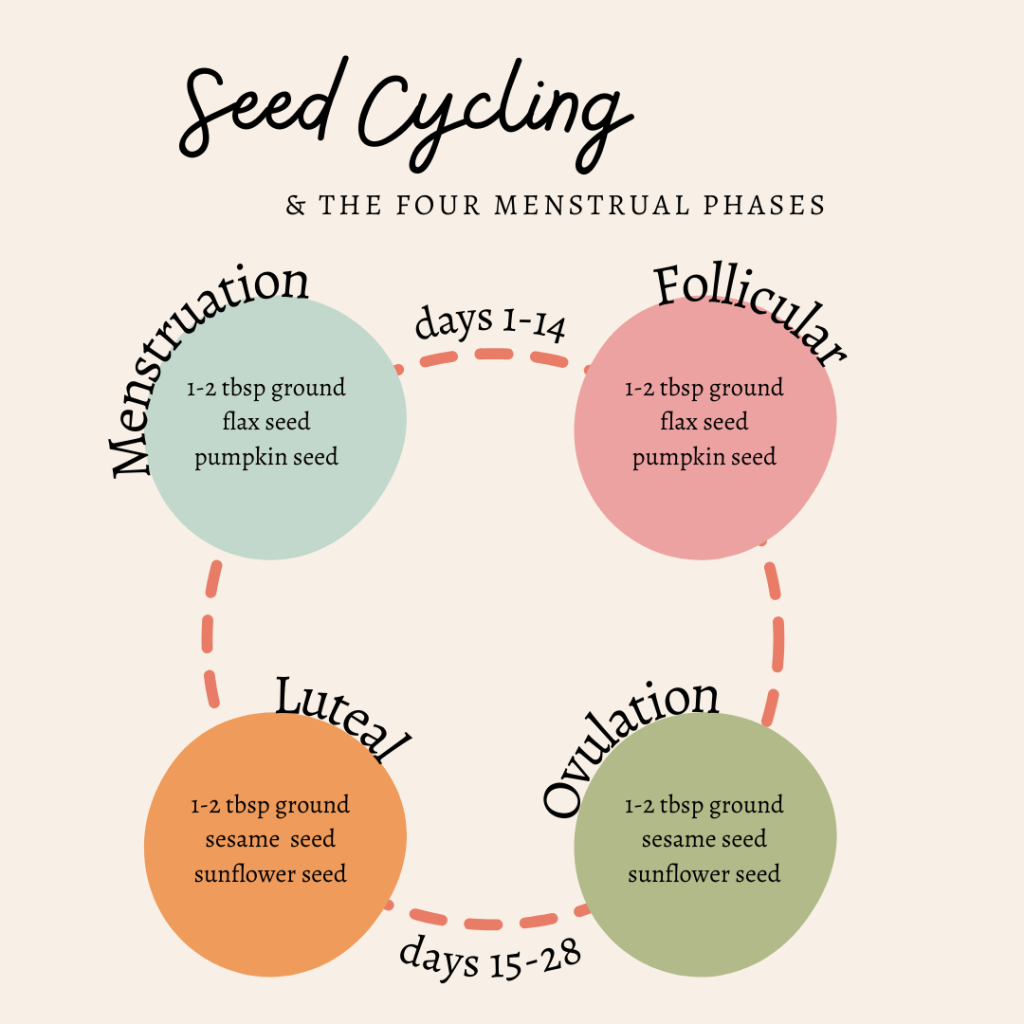
Menstruation-Follicular (days 1-14): incorporate 1-2 tbsp of ground flax or pumpkin seeds from onset of menstruation to ovulation.
Ovulation-Luteal (days 15-28): incorporate 1-2 tbsp of ground sunflower or sesame seeds from ovulation to your next menstruation.
Seed cycling is by no means going to immediately alleviate any symptoms you may have as it is most effective when implemented consistently and alongside other hormone balancing practices. However, it is a great way to experiment with the medicinal properties contained in food and use them to optimize our health.
Tips for Seed Cycling:
- Grind up around 1 cup of raw seeds and store them in the fridge for optimal freshness
- Add them to smoothies, yogurt, granola, cereal, soups, salads, pudding, and really whatever else you think they sound good on
- Track your cycle so you have a good idea of when to eat which seeds
- Print off my visual included in this post (and available for download on my “free content” page) and stick it on the fridge or a cupboard drawer so you can easily see which seeds to be eating during which phase
Please reach out to me at sarah.sajnovic@gmail.com or contact me through my contact form on the “Let’s Connect!” page on my website if you have any questions or are interested in working together within one of my specialized programs. I cannot wait to support you on your journey to pregnancy, throughout your pregnancy, or during your postpartum period.
 Sarah Sajnovic Nutrition
Leave a comment